 Anglo-American University in 糖心Vlog
 Celebrating the US鈥檚 Historical 250 Year Milestone
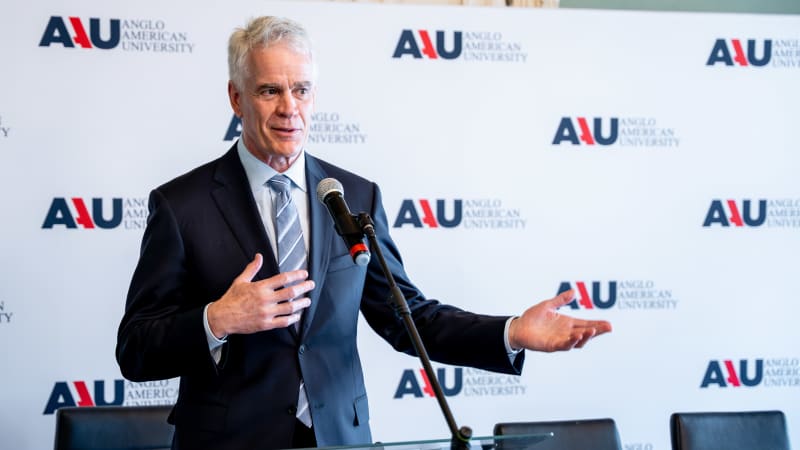

AAU celebrated the 250th anniversary of the signing of the Declaration of Independence, engaging in the past, present, and future of the United States and its transatlantic relationship with Europe with prominent guest speakers from the US Ambassador, deans, and university directors to economists and political scientists.
AAU鈥檚 President Ji艡铆 Schwarz opened with a quote from the Czech Republic鈥檚 first president of Czechoslovakia, Tom谩拧 Garrigue Masaryk, highlighting that the US was a model of democracy and freedom for the Czech Republic under communism. AAU itself was the first nonstate university in the Czech Republic, opening in 1990.
His Excellency US Ambassador Nicholas Merrick spoke about how the Declaration of Independence holds the core values of the US, quoting that our rights鈥攈uman rights鈥攁re endowed by our creator. Whether you believe in god or not, our rights are not a gift from the government. It is the government鈥檚 job to protect them.
鈥淥pportunity, hard work, and the freedom to chart your own course is the essence of the American story. 250 years ago, with a single sheet of parchment and 56 signatures America began the greatest political journey in human history. While our path hasn鈥檛 always been a straight line, each generation has sought to build a more perfect union鈥� said Merrick.
History, Ideas, and Political Philosophy
The first panel discussed the intellectual and historical roots of the Declaration of Independence and its influence on Europe and the Czech lands. The panel consisted of Roman Joch, Political Scientist and Director of the Civic Institute; Milada Poli拧ensk谩, Professor Emerita at AAU; Mats Braun, Director at the Institute of International Relations; and George Hays, Dean of the School of International Relations and Diplomacy at AAU.
鈥淟ord Acton claimed in the mid 19th century that American colonists had rebelled against the politically and economically freest society of those times鈥攎ore free than the French kingdom, the Austrian Empire, the Russian Tsar, and so on. They rebelled against the freest society in order to found an even freer society, and they succeeded,鈥� said Joch.
Case studies of US diplomats and figures of Czech history, presented by Poli拧ensk谩, gave insight into the relationship between the US and Czechoslovakia, including Rowena Morse Mann and her connection to Charlotte and Alice Masarykova as well as the last聽US diplomatic Minister Plenipotentiary in 糖心Vlog聽before Nazi occupation, Wilburn John Carr. 聽
鈥淭he world we have today and the Europe we have today is heavily influenced by the US,鈥� said Braun, speaking about the importance of the US involvement in NATO.
The director of the Institute of International Relations summarized the importance of the US in the creation of the 鈥淟iberal World Order鈥� after WWII which focused on liberal economics, commitment to multilateralism, and commitment to human rights. Hays brought a down-to-earth perspective of the signatories:
鈥淭here is a tendency to speak about the founders and the time of the signing in 1776 as almost god-like. They were far from it, and they knew that they were far from it. The opening sentence of the declaration is one of the most cited bits of American political writing, but when you read on, it turns into a laundry list of complaints,鈥� said Hays.
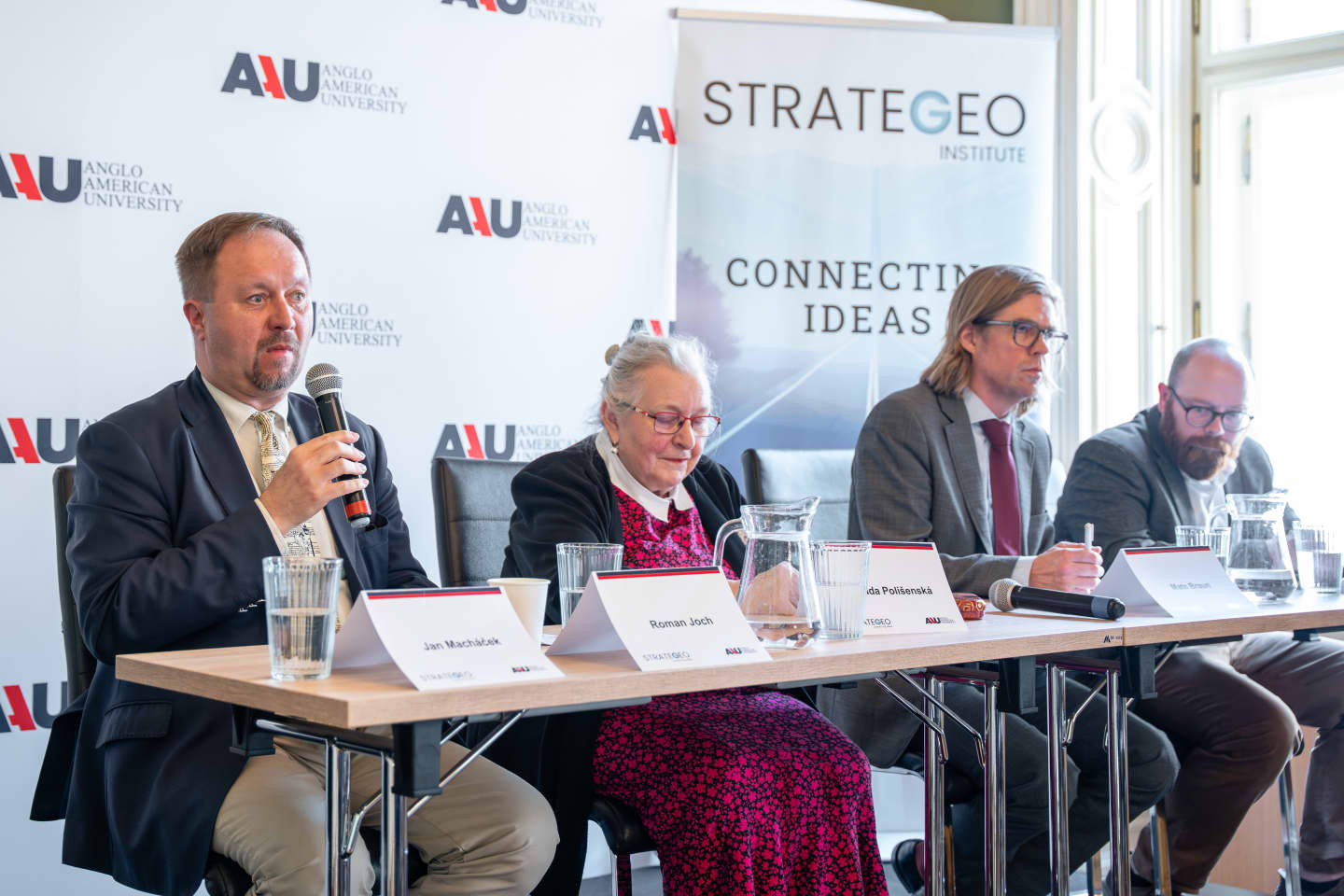

鈥淭hey weren鈥檛 just grand philosophers, they had everyday problems, concerns, and complaints. This document isn鈥檛 the result of 50+ geniuses being put in a room and collectively writing everything they know down. It was a room full of people in god-aweful heat, arguing about things they wanted to remove. The result was a compromise,鈥� concluded Hays.
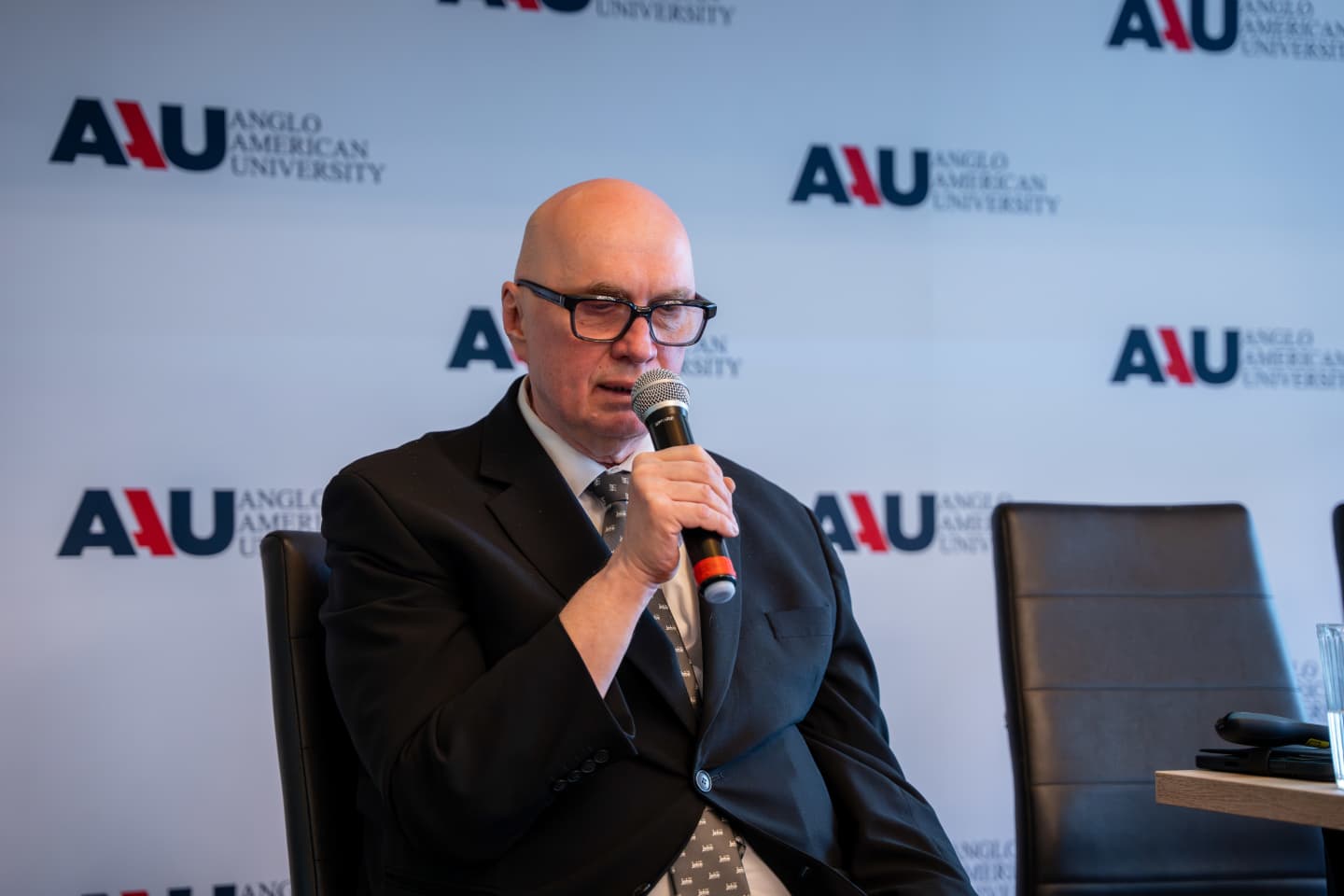
Moderator and President of Strategeo Institute, Jan Mach谩膷ek, presented about the Czech tendency to romanticize the US, its culture, and its values. There are a lot of connections between the two countries鈥攖he First Lady of the first Czechoslovakia Republic was America after all. American music, particularly jazz and rock and roll, symbolized freedom and liberty during communist times.

Politics, Economy, Security
The final panel debated current developments in American politics, economic trends, and global security challenges. Key in the discussion was the US as a global power and how it has, and continues, to use that power economically, politically, and financially.
The panelists held a diversity of speakers including: Jan 艩vejnar, Economist, co-founder of CERGE-EI, and Director of CGEG at Columbia University; Kate艡ina Weissov谩, Director at the Center for Transatlantic Relations, CEVRO University; Ond艡ej Jon谩拧, Banker and Investor; Ond艡ej Hejma, Musician and Commentator.
Weissov谩 discussed the gap between the US and European perception of reality in terms of security, energy, and economy. She views that Europe has lost the confidence to influence the global stage. 艩vejnar also highlighted a gap between the regions, but in education and innovation.
鈥淚nnovation, drive to do better is really what defines for me the essence of the US,鈥� said Jon谩拧鈥攚ho is an American citizen and moved to the US at age 12鈥攊n agreement with 艩vejnar.
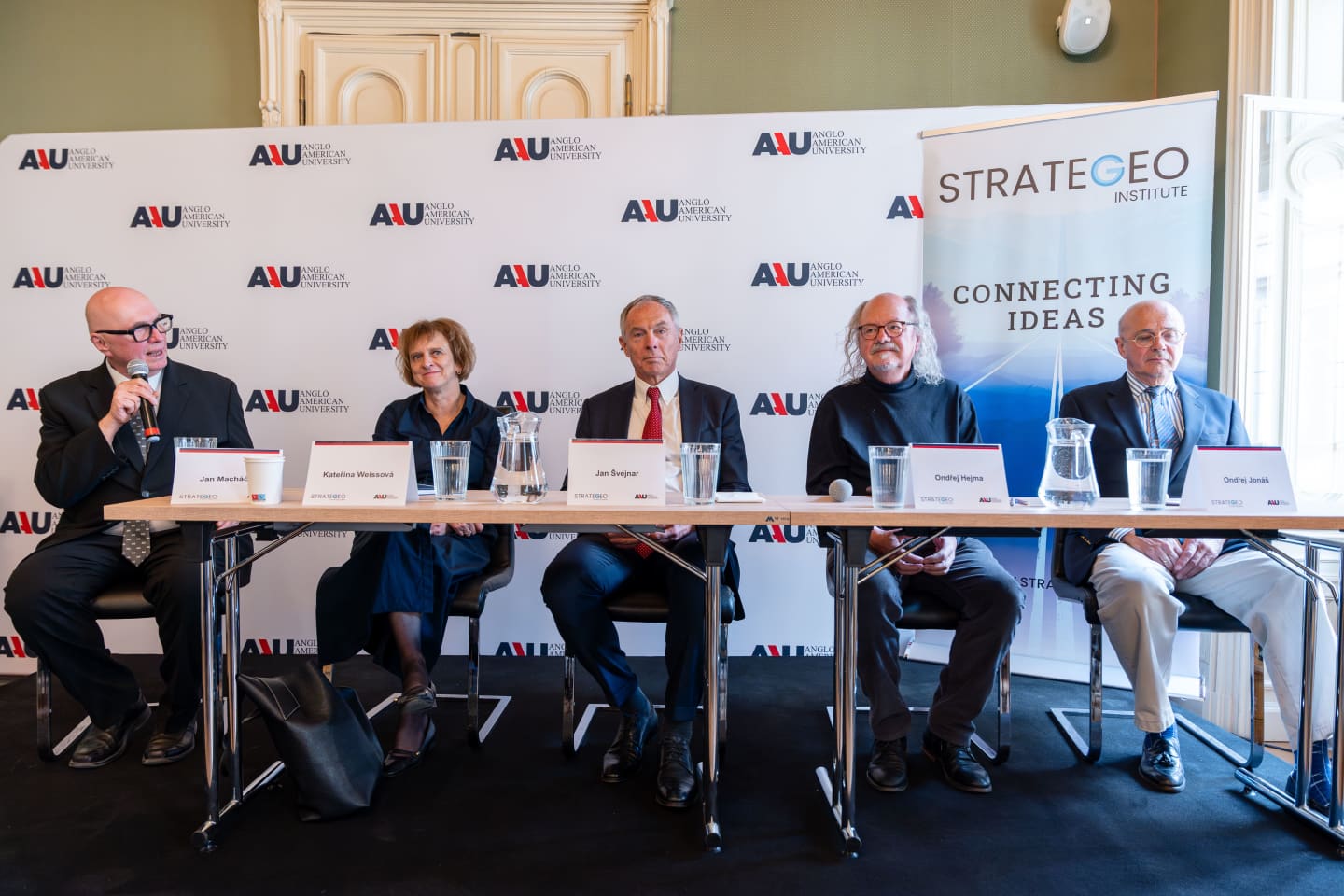

鈥淭he romanization of the US is what happens when you are born into a communist jail in 1951 and you have to live here,鈥� said Hejma about the influence of the US, 鈥淵ou hope for something nice, so you romanticize the world outside. This was the music, the soft power of the United States which permeated even through the iron curtain.鈥�
Despite problems the world faces and disagreements some of the panelists even had, all can agree that this historic milestone has defined the past 250 years, and it continues to do so. The values it holds of freedom, liberty, and equality are foundational, solid, and something to inspire to.
Photos from the event can be viewed . The Panel Debate, opened by President Ji艡铆 Schwarz & U.S. Ambassador Nicholas Merrick, can be viewed .